AI Cannot Automate Humanity: What the London HR Tech Conference Reminded Me About People-First HR

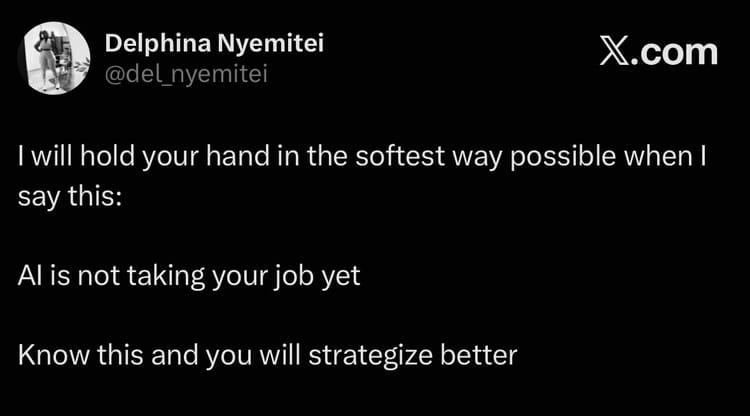
As artificial intelligence reshapes the HR landscape, the most important thing we can do is double down on what machines will never fully replicate: genuine, context-driven human care.
Walking through the booths and sessions at this year's HR Tech Conference in London, one thing became unmistakably clear. The industry is moving fast. Platforms are smarter, automation is deeper, and the promise of efficiency is louder than ever. Yet, amid all the impressive demonstrations and forward-looking keynotes, the most resonant insight I took home had nothing to do with a new feature or a product update. It had to do with a principle that is as old as the profession itself: people are not processes.
This article is not a critique of HR technology. Far from it. The tools on display were genuinely impressive, and the ambition behind them is worthwhile. But the conference also surfaced a tension that HR professionals cannot afford to ignore: as we embrace AI to handle the repetitive and administrative, we must be intentional about protecting the human judgment, empathy, and contextual intelligence that define our real value.
The Central Argument: foundationalizing the human elements of HR:
In the age of AI, the most strategic thing HR professionals can do is foundationalize the human elements of how we work. This means treating empathy, context, relationships, and individual understanding not as soft add-ons to our work but as the structural core of it. The more automation takes on transactional tasks, the more our distinctly human capabilities must be sharpened, protected, and deliberately built into every system and process we design or adopt. The goal of HR technology should be to give us more time and capacity to be more human, not to replace the humanity in our work altogether.
At the heart of what HR does is this: we enhance the talent and human experience of the business. The workforce is not a resource pool to be managed at scale. It is a living ecosystem of individuals with careers, ambitions, challenges, and personal circumstances that shape their performance at every turn. Technology that ignores this reality is not efficient. It is incomplete.
A standout example: Adobe’s approach to contextual learning
One of the most thought-provoking conversations I had at the conference was with a Director at the Adobe stand. They were presenting a feature recently introduced into their training module suite: the ability for Learning and Development managers to customize and adapt content to fit specific organisational contexts and individual scenarios.
At first glance, this might seem like a minor UX enhancement. In practice, it represents something far more significant. It is a product built with the acknowledgment that a generic learning experience is, at best, a starting point. Real learning, real development, and real change happen when the content speaks to where a person actually is.
Customization in HR technology is not just a feature. It is a philosophy. When tools are designed to adapt to context rather than expecting people to adapt to the tool, they become genuinely useful instruments for human development rather than efficient vehicles for box-ticking.
The PIP Principle: Why context is not optional
To make this concrete, consider the Performance Improvement Plan. Few HR instruments carry more weight or more risk of getting it wrong. A PIP is often treated as a documentation exercise, a formal record that performance has fallen below expectations. But approached that way, it almost always fails.
Here is what is really happening when an employee reaches the point of a PIP: something changed. A person who was once performing well is no longer doing so. That shift has a cause, and more often than not, that cause is rooted in something personal, relational, organisational, or circumstantial. A health challenge. A team dynamic that broke down. A change in role scope that was never properly supported. A personal situation that quietly eroded focus and confidence over time.
Before a single metric is documented, before a target is set or a timeline is established, the most important question an HR professional can ask is: what actually happened here? The answer to that question is not in the data. It is in a conversation. It is in a relationship built on enough trust that an employee feels safe enough to be honest. And that is not something a system can generate for you. A Performance Improvement Plan that is not rooted in the individual's context is not a plan for improvement. It is a plan for departure.
The data matters. The documentation matters. The targets matter. But all of it must be built on a foundation of genuine understanding. What does this person need? What has changed for them? What do they need to succeed? The answers are always specific, always personal, and always contextual. A templated approach will not get anyone there.
What this means for how we engage with HR Technology
None of this is an argument against AI or HR technology. It is an argument for how we use it. The conference made it evident that the best tools being developed right now are the ones designed with human complexity in mind. They create space for customisation, for judgment, for the HR professional to bring their expertise and knowledge of their people into the process.
The less sophisticated tools, regardless of how polished their interfaces are, treat HR as a series of steps to be completed rather than a discipline centred on human understanding. Those tools will produce outputs. They will generate documents, track completion rates, and report on engagement scores. But they will not produce outcomes, because outcomes require us.
As HR professionals, our job when evaluating technology is not just to ask whether it saves time. The more important question is whether it preserves and enhances the quality of the human work that follows. Does this tool give me more room to have better conversations? Does it free me up to understand my people more deeply? Does it allow me to tailor my approach to each individual rather than applying a one-size-fits-all response?
The Takeaway: Human-centricity is a strategic imperative
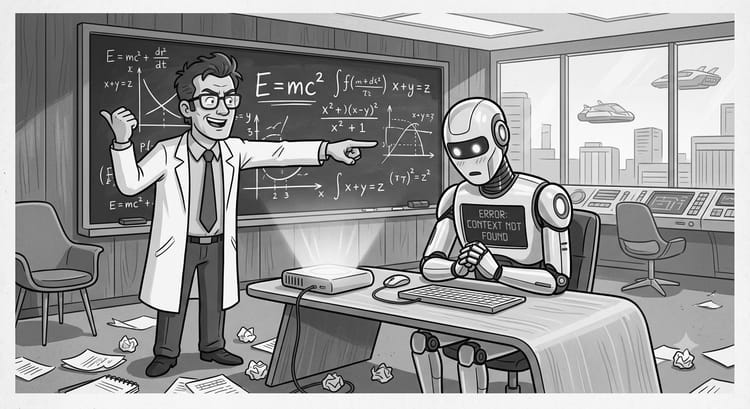
The HR professionals who will thrive in an AI-augmented world are not those who become the most efficient at processing tasks. They are the ones who become the most skilled at the things AI cannot do: building trust, reading context, understanding the whole person, and designing experiences that meet people where they are.
This is not about resisting change. It is about being clear on what our value actually is and ensuring that as our tools evolve, our core purpose does not get lost in the upgrade. The human workforce is irreplaceable. And so is the HR professional who truly understands them.
The conference was a reminder that the future of HR is not a choice between technology and humanity. It is a commitment to using technology in service of humanity. That distinction is everything.


Member discussion